Your 5th aml directive virtual currency images are available in this site. 5th aml directive virtual currency are a topic that is being searched for and liked by netizens now. You can Get the 5th aml directive virtual currency files here. Download all free photos.
If you’re looking for 5th aml directive virtual currency images information connected with to the 5th aml directive virtual currency topic, you have visit the right site. Our site frequently provides you with suggestions for viewing the highest quality video and image content, please kindly search and locate more informative video articles and images that match your interests.
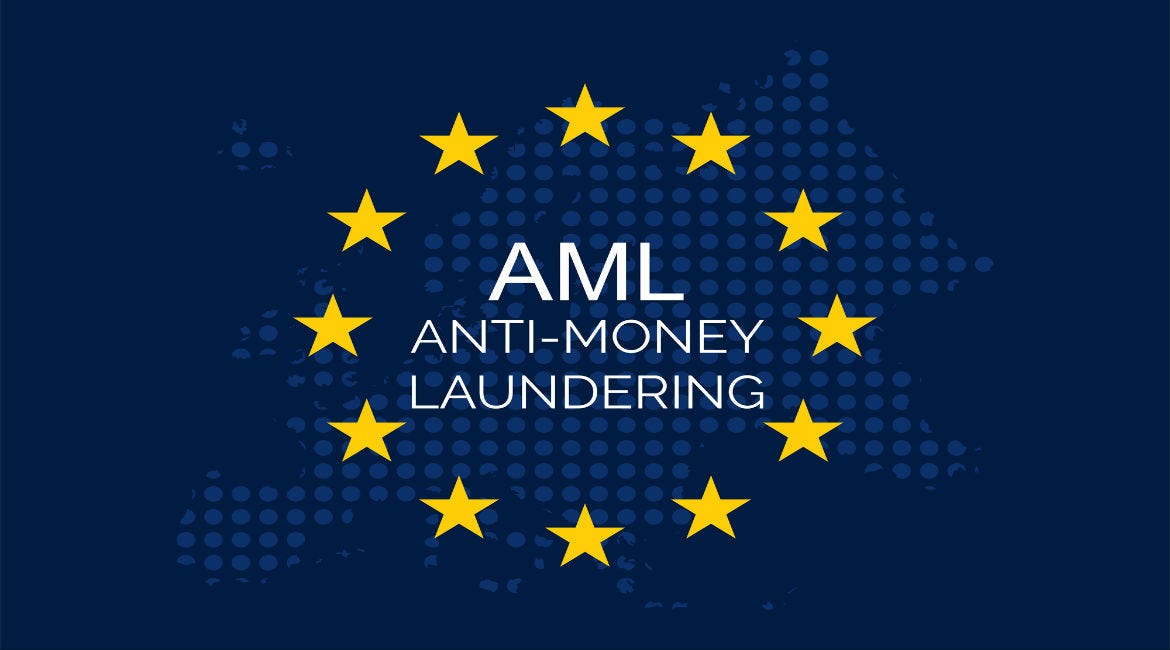
5th Aml Directive Virtual Currency. Virtual currencies pose a serious threat to be used for money laundering weakening the European Unions financial system. The 5th AML Directive will effectively bring the EU in line with cryptocurrency measures introduced in the United States over five years ago. On the 26 th of April 2018 the European Parliament announced the Fifth Anti-Money Laundering Directive 5AMLD which would provide significant amendments and updates to the 4AMLD as well as tackling the growing virtual currency sector. It was first published on June 19th 2018 in the Official Journal of the European Union as an iteration of the 4th Anti-Money Laundering Directive AMLD4.
 Although The Eu Is Not Actively Promoting Cryptocurrencies Its Policies Have Opened The Door For The Blockchain Buy Bitcoin Cryptocurrency Banking Institution From id.pinterest.com
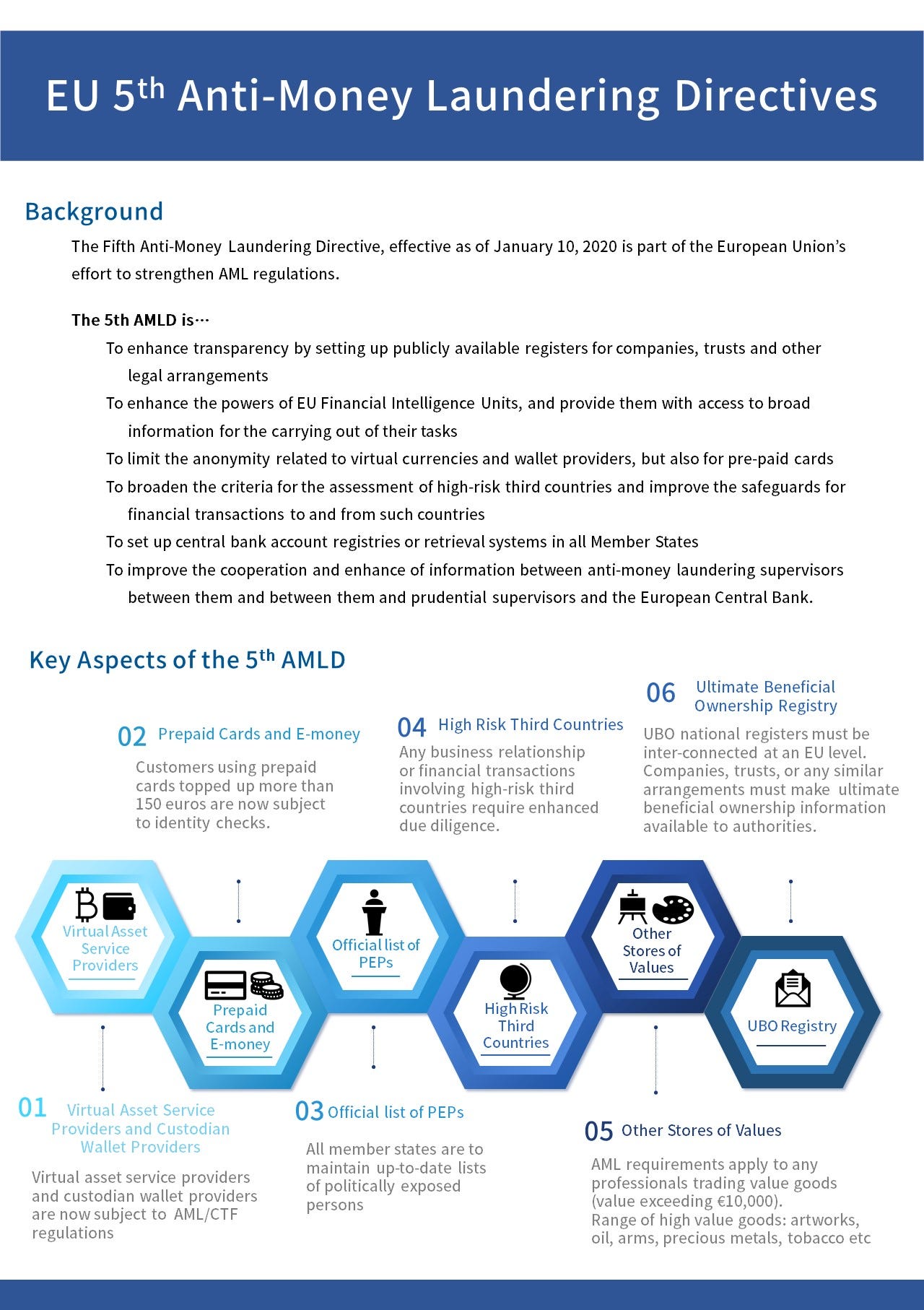
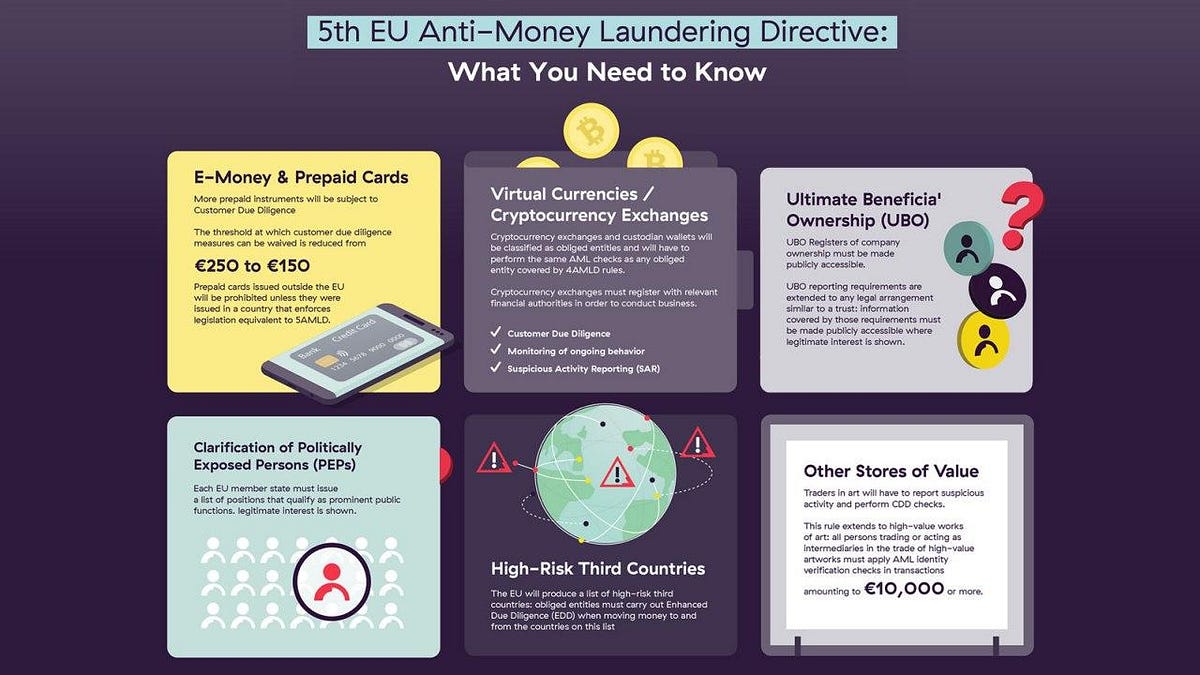
First of all the 5th Anti-Money Laundering Directive contains the legal definition of virtual currencies as a digital representation of value that is not issued or guaranteed by a central bank or a public authority is not necessarily attached to a legally established currency and does not possess a legal status of currency or money but is accepted by natural or legal persons as a means of exchange. One main update is that virtual currencies and electronic wallet providers will be subject to the provisions of the Anti-Money-Laundering Directive in the future. Directive EU 2018843 the fifth anti-money laundering Directive intends to mitigate these risks by introducing a definition of virtual currencies within Union law. It concludes that there exist some serious loopholes in the 5th AML directive enabling to created money laundering schemes using virtual currencies which wont be subject to the restrictions and. It was first published on June 19th 2018 in the Official Journal of the European Union as an iteration of the 4th Anti-Money Laundering Directive AMLD4. In more detail 5MLD introduces the following measures.
In more detail 5MLD introduces the following measures.
Directive EU 2018843 the fifth anti-money laundering Directive intends to mitigate these risks by introducing a definition of virtual currencies within Union law. Directive EU 2018843 the fifth anti-money laundering Directive intends to mitigate these risks by introducing a definition of virtual currencies within Union law. It concludes that there exist some serious loopholes in the 5th AML directive enabling to created money laundering schemes using virtual currencies which wont be subject to the restrictions and. The 5AMLD has further broadened the scope of obliged entities to include virtual currencies anonymous prepaid cards and other digital currencies such as bitcoin exchanges and wallet services to the list of activities carrying the risk of money laundering and terrorist financing MLTF. Member States of the European Union have until 2020 to transpose the directive. The 5th AML Directive will effectively bring the EU in line with cryptocurrency measures introduced in the United States over five years ago.
 Source: pinterest.com
One main update is that virtual currencies and electronic wallet providers will be subject to the provisions of the Anti-Money-Laundering Directive in the future. In more detail 5MLD introduces the following measures. It concludes that there exist some serious loopholes in the 5th AML directive enabling to created money laundering schemes using virtual currencies which wont be subject to the restrictions and. The Fifth Anti-Money Laundering Directive. According to AML Directive virtual currencies means a digital representation of value that is not issued or guaranteed by a central bank or a public authority is not necessarily attached to a legally established currency and does not possess a legal status of currency or money but is accepted by natural or legal persons as a means.
 Source: pinterest.com
The 5th Anti-Money Laundering Directive AMLD5 is an update to the European Unions anti-money laundering AML legal framework. First of all the 5th Anti-Money Laundering Directive contains the legal definition of virtual currencies as a digital representation of value that is not issued or guaranteed by a central bank or a public authority is not necessarily attached to a legally established currency and does not possess a legal status of currency or money but is accepted by natural or legal persons as a means of exchange. Although much of 5MLDs content updates the 4MLD it makes a significant new legislative step in the treatment of virtual currencies. The new Directive will now encompass platforms for the exchange of virtual currency to fiat currencies so-called crypto currency exchanges and providers of electronic wallets for virtual currencies such as Bitcoin Ether or Ripple. Member States of the European Union have until 2020 to transpose the directive.
 Source: medium.com
It was first published on June 19th 2018 in the Official Journal of the European Union as an iteration of the 4th Anti-Money Laundering Directive AMLD4. One main update is that virtual currencies and electronic wallet providers will be subject to the provisions of the Anti-Money-Laundering Directive in the future. First of all the 5th Anti-Money Laundering Directive contains the legal definition of virtual currencies as a digital representation of value that is not issued or guaranteed by a central bank or a public authority is not necessarily attached to a legally established currency and does not possess a legal status of currency or money but is accepted by natural or legal persons as a means of exchange. 5AMLD 5th Anti-Money Laundering Directive. The 5AMLD has further broadened the scope of obliged entities to include virtual currencies anonymous prepaid cards and other digital currencies such as bitcoin exchanges and wallet services to the list of activities carrying the risk of money laundering and terrorist financing MLTF.
Source: id.pinterest.com
Under the 5 th Anti-Money Laundering Directive the criteria to qualify as an obliged entity remains as is and continues to include financial services institutions. Virtual currencies pose a serious threat to be used for money laundering weakening the European Unions financial system. Virtual currencies means a digital representation of value that is not issued or guaranteed by a central bank or a public authority is not necessarily attached to a legally established currency and does not possess a legal status of currency or money but is accepted by natural or legal persons as a means of exchange and which can be transferred stored and traded electronically. The Fifth Anti-Money Laundering Directive. European regulators took more of a wait and see approach than their US counterparts at a time when the scale or nature of the risks posed by cryptocurrencies.
 Source: argoskyc.medium.com
Virtual currencies means a digital representation of value that is not issued or guaranteed by a central bank or a public authority is not necessarily attached to a legally established currency and does not possess a legal status of currency or money but is accepted by natural or legal persons as a means of exchange and which can be transferred stored and traded electronically. On the 26 th of April 2018 the European Parliament announced the Fifth Anti-Money Laundering Directive 5AMLD which would provide significant amendments and updates to the 4AMLD as well as tackling the growing virtual currency sector. Extending the Scope of the European Unions Regulatory Authority to Virtual Currency Transactions. The 5th AML Directive legislative process is nearing completion and could enter into force in March 2018. 5AMLD 5th Anti-Money Laundering Directive.
 Source: ar.pinterest.com
Directive EU 2018843 the fifth anti-money laundering Directive intends to mitigate these risks by introducing a definition of virtual currencies within Union law. Virtual currencies pose a serious threat to be used for money laundering weakening the European Unions financial system. In the following series based on Coinfirms Guidance on managing AML Risk for Virtual Currencies and Blockchain Transactions Coinfirms CEO Pawel Kuskowski. The Fifth Anti-Money Laundering Directive. On the 26 th of April 2018 the European Parliament announced the Fifth Anti-Money Laundering Directive 5AMLD which would provide significant amendments and updates to the 4AMLD as well as tackling the growing virtual currency sector.
 Source: shuftipro.com
5AMLD 5th Anti-Money Laundering Directive. First of all the 5th Anti-Money Laundering Directive contains the legal definition of virtual currencies as a digital representation of value that is not issued or guaranteed by a central bank or a public authority is not necessarily attached to a legally established currency and does not possess a legal status of currency or money but is accepted by natural or legal persons as a means of exchange. How the EU 5th AML Directive will impact the world of digital currencies. On the 26 th of April 2018 the European Parliament announced the Fifth Anti-Money Laundering Directive 5AMLD which would provide significant amendments and updates to the 4AMLD as well as tackling the growing virtual currency sector. Although much of 5MLDs content updates the 4MLD it makes a significant new legislative step in the treatment of virtual currencies.
 Source: pinterest.com
On the 26 th of April 2018 the European Parliament announced the Fifth Anti-Money Laundering Directive 5AMLD which would provide significant amendments and updates to the 4AMLD as well as tackling the growing virtual currency sector. The Fifth Anti-Money Laundering Directive. One main update is that virtual currencies and electronic wallet providers will be subject to the provisions of the Anti-Money-Laundering Directive in the future. The 5AMLD has further broadened the scope of obliged entities to include virtual currencies anonymous prepaid cards and other digital currencies such as bitcoin exchanges and wallet services to the list of activities carrying the risk of money laundering and terrorist financing MLTF. The 5th Anti-Money Laundering Directive AMLD5 is an update to the European Unions anti-money laundering AML legal framework.
 Source: coinfirm.com
Extending the Scope of the European Unions Regulatory Authority to Virtual Currency Transactions. On April 19 2018 the European Parliament EP adopted the European Commissions the Commission proposal for a Fifth Anti-Money Laundering Directive AMLD5 to prevent terrorist financing and money. Virtual currencies pose a serious threat to be used for money laundering weakening the European Unions financial system. It was first published on June 19th 2018 in the Official Journal of the European Union as an iteration of the 4th Anti-Money Laundering Directive AMLD4. Under the 5 th Anti-Money Laundering Directive the criteria to qualify as an obliged entity remains as is and continues to include financial services institutions.
 Source: medium.com
European regulators took more of a wait and see approach than their US counterparts at a time when the scale or nature of the risks posed by cryptocurrencies. It concludes that there exist some serious loopholes in the 5th AML directive enabling to created money laundering schemes using virtual currencies which wont be subject to the restrictions and. Directive EU 2018843 the fifth anti-money laundering Directive intends to mitigate these risks by introducing a definition of virtual currencies within Union law. According to AML Directive virtual currencies means a digital representation of value that is not issued or guaranteed by a central bank or a public authority is not necessarily attached to a legally established currency and does not possess a legal status of currency or money but is accepted by natural or legal persons as a means. The 5th AML Directive will effectively bring the EU in line with cryptocurrency measures introduced in the United States over five years ago.
 Source: coinfirm.com
The 5th AML Directive legislative process is nearing completion and could enter into force in March 2018. European regulators took more of a wait and see approach than their US counterparts at a time when the scale or nature of the risks posed by cryptocurrencies. Virtual currencies pose a serious threat to be used for money laundering weakening the European Unions financial system. The Fifth Anti-Money Laundering Directive. On April 19 2018 the European Parliament EP adopted the European Commissions the Commission proposal for a Fifth Anti-Money Laundering Directive AMLD5 to prevent terrorist financing and money.
 Source: complyadvantage.com
Some service providers connected to virtual currencies are. Virtual currencies means a digital representation of value that is not issued or guaranteed by a central bank or a public authority is not necessarily attached to a legally established currency and does not possess a legal status of currency or money but is accepted by natural or legal persons as a means of exchange and which can be transferred stored and traded electronically. A legal definition of cryptocurrency which may broadly be regarded as a digital representation. Both 5AML and Polish AML act also define virtual currency. One main update is that virtual currencies and electronic wallet providers will be subject to the provisions of the Anti-Money-Laundering Directive in the future.
 Source: sintesinetwork.com
A legal definition of cryptocurrency which may broadly be regarded as a digital representation. Member States of the European Union have until 2020 to transpose the directive. European regulators took more of a wait and see approach than their US counterparts at a time when the scale or nature of the risks posed by cryptocurrencies. The 5th AML Directive will effectively bring the EU in line with cryptocurrency measures introduced in the United States over five years ago. It was first published on June 19th 2018 in the Official Journal of the European Union as an iteration of the 4th Anti-Money Laundering Directive AMLD4.
This site is an open community for users to do sharing their favorite wallpapers on the internet, all images or pictures in this website are for personal wallpaper use only, it is stricly prohibited to use this wallpaper for commercial purposes, if you are the author and find this image is shared without your permission, please kindly raise a DMCA report to Us.
If you find this site convienient, please support us by sharing this posts to your preference social media accounts like Facebook, Instagram and so on or you can also save this blog page with the title 5th aml directive virtual currency by using Ctrl + D for devices a laptop with a Windows operating system or Command + D for laptops with an Apple operating system. If you use a smartphone, you can also use the drawer menu of the browser you are using. Whether it’s a Windows, Mac, iOS or Android operating system, you will still be able to bookmark this website.


