Your 5th money laundering directive key points images are ready. 5th money laundering directive key points are a topic that is being searched for and liked by netizens today. You can Find and Download the 5th money laundering directive key points files here. Find and Download all free photos.
If you’re searching for 5th money laundering directive key points pictures information related to the 5th money laundering directive key points keyword, you have pay a visit to the right site. Our site frequently provides you with hints for downloading the highest quality video and picture content, please kindly hunt and find more enlightening video articles and graphics that match your interests.
5th Money Laundering Directive Key Points. The 5 th Anti-Money Laundering Directive means that all companies affected need to further adapt their internal measures to prevent money laundering and terrorism financing. This proposal soon became known as the Fifth Anti-Money Laundering Direct ive 5MLD. The amendments stemmed from the European Commissions 2016 Action Plan to tackle the use of the financial system for the funding of criminal activities terrorist financing and the largescale obfuscation of funds. The impact of 5AMLD is far-reaching.
 A Guide To The Eu S 5th Anti Money Laundering Directive Amld5 Sygna From sygna.io
The Fifth Money Laundering Directive 5AMLD came into force on January 10 2020. The fifth directive is more of a series of amendments to the structure of the fourth directive adding various additional provisions that werent included in the text of 4AMLD. At its most basic level 5MLD will further help relevant authorities to counter the threats posed by money laundering and terrorist financing. It mandates the use of accessible registers of. Increased emphasis on online identification. Money Laundering is a key part of the FCAs 201920 business plan and they are actively approaching firms to understand the current state of AML systems and controls might you benefit from an ATEB AML audit.
The Money Laundering and Terrorist Financing Amendment Regulations 2019.
These are highlighted in the following paragraphs. 5AMLD acknowledges that there is now a greater digitalization of ID. The underlying reason for these amendments was the belief that e-money and prepaid cards had to some extent been used in the financing of the attacks in Paris in November 2015. Measures for the Fifth EU Money Laundering Directive MLD51 MLD5 entered into force as a matter of European law during July 2018 and makes a number of amendments to the Fourth Money Laundering Directive MLD42 EU Member States have until 10 January 2020 to implement MLD5. 5 MLD replaces 4MLD with the intention of improving transparency and the existing preventative framework to more effectively counter money laundering and terrorist financing across the EU. It has come to our attention over the past few weeks that there has been some suggestion from some misinformed individuals in the fintech sector about the ongoing compliance of electronic ID verification systems in light of the 5 th Money Laundering directive 5MLD.
 Source: pinterest.com
Increased emphasis on online identification. Money Laundering is a key part of the FCAs 201920 business plan and they are actively approaching firms to understand the current state of AML systems and controls might you benefit from an ATEB AML audit. New obligated entities. Issuers of electronic money will also have to evaluate their business models as a whole. STEP Policy Points The EU Fifth Anti-Money Laundering Directive 5AMLD Executive summary The EU Fifth Anti-Money Laundering Directive 5AMLD previously referred to as amendments to the Fourth Anti-Money Laundering Directive updates the EUs approach to tackling money laundering.
 Source: arachnys.com
Pursuant to 5MLD the changes have to be brought into force by January 2020. The 5th Money Laundering Directive was implemented on 10th January 2020 and is now known as. Pursuant to 5MLD the changes have to be brought into force by January 2020. The Treasury published a consultation paper mid-April on its proposals for Transposition of the Fifth Money Laundering Directive 5MLD. 5MLD will introduce a number of significant changes to the money laundering regime.
Source: sygna.io
The Fifth Money Laundering Directive 5AMLD came into force on January 10 2020. On 19 April 2018 the European Parliament adopted the 5th AntiMoney Laundering Directive. The amendments stemmed from the European Commissions 2016 Action Plan to tackle the use of the financial system for the funding of criminal activities terrorist financing and the largescale obfuscation of funds. New obligated entities. 5AMLD better defines virtual currencies as.
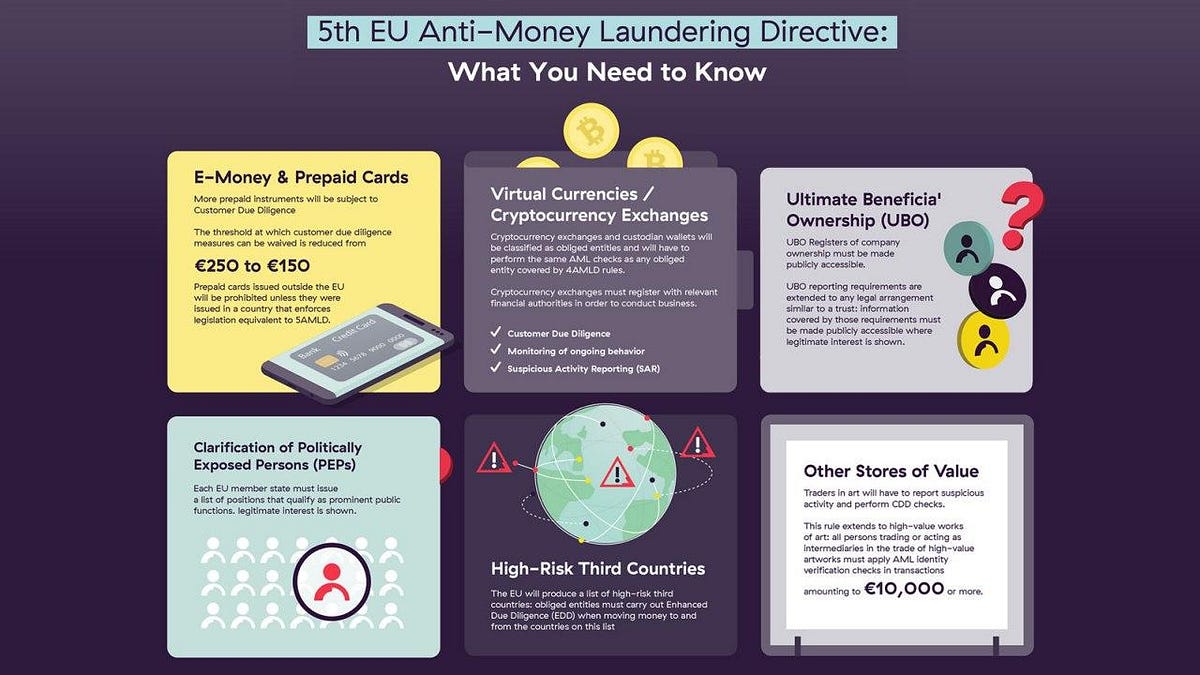 Source: medium.com
The 5th Anti-Money Laundering Directive AMLD5 is an update to the European Unions anti-money laundering AML legal framework. Issuers of electronic money will also have to evaluate their business models as a whole. The fifth directive is more of a series of amendments to the structure of the fourth directive adding various additional provisions that werent included in the text of 4AMLD. The Member States had to transpose this Directive by 10 January 2020. Increased emphasis on online identification.
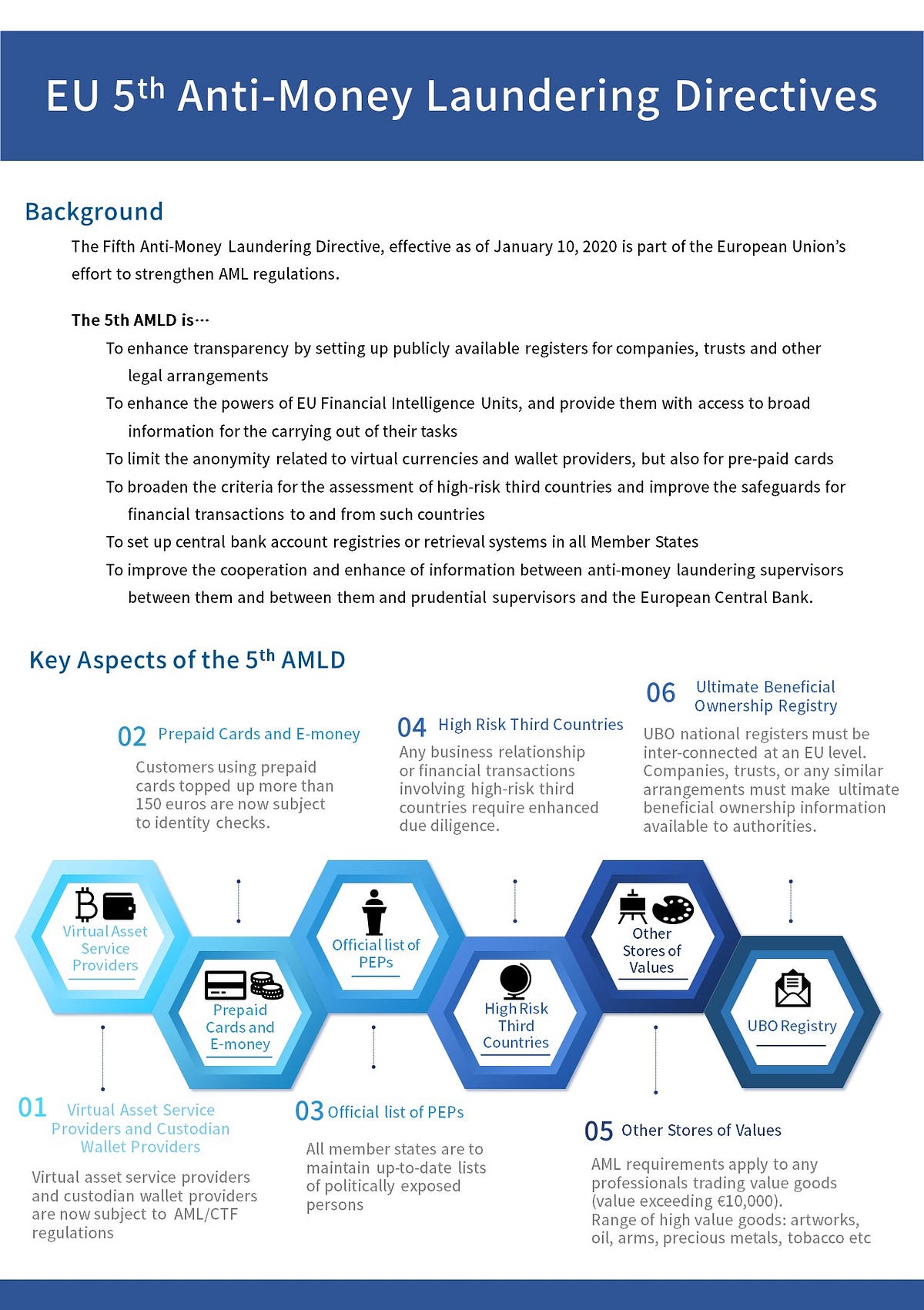 Source: argoskyc.medium.com
5AMLD acknowledges that there is now a greater digitalization of ID. On 19 June 2018 the 5 th anti-money laundering Directive Directive EU 2018843 which amended the 4 th anti-money laundering Directive was published in the Official Journal of the European Union. Increased emphasis on online identification. 5AMLD better defines virtual currencies as. At its most basic level 5MLD will further help relevant authorities to counter the threats posed by money laundering and terrorist financing.
 Source: softelligence.net
These are highlighted in the following paragraphs. It is drafted as a minimum-. 5AMLD better defines virtual currencies as. The 5th Money Laundering Directive was implemented on 10th January 2020 and is now known as. Fifth Money Laundering Directive 5MLD 26 June 2019.
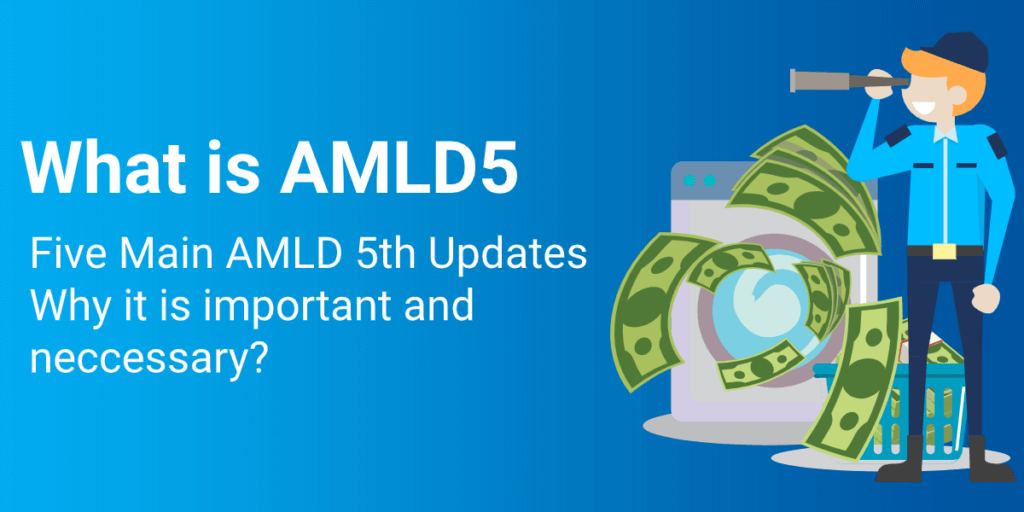 Source: idenfy.com
The main changes are focused on enhanced powers for direct access to information and increased transparency around beneficial ownership information and trusts. A digital representation of value that can be digitally transferred stored or traded and is accepted by natural or legal persons as a medium of exchange but does not have legal tender status and which is not funds as defined in points 25 of Article 4 of the Directive 20152366EC nor monetary value stored on instruments exempted as specified in Article 3k and 3l of that Directive. On 19 April 2018 the European Parliament adopted the 5th AntiMoney Laundering Directive. The fifth directive is more of a series of amendments to the structure of the fourth directive adding various additional provisions that werent included in the text of 4AMLD. It was first published on June 19th 2018 in the Official Journal of the European Union as an iteration of the 4th Anti-Money Laundering Directive AMLD4.
 Source: camsafroza.com
Issuers of electronic money will also have to evaluate their business models as a whole. The key points of 5AMLD that financial institutions need to be aware of. New obligated entities. 5 MLD replaces 4MLD with the intention of improving transparency and the existing preventative framework to more effectively counter money laundering and terrorist financing across the EU. The intention of 5MLD is to ensure the existing framework is effective up-to-date proportionate and is reflective of the current environment.
 Source: vinciworks.com
It has come to our attention over the past few weeks that there has been some suggestion from some misinformed individuals in the fintech sector about the ongoing compliance of electronic ID verification systems in light of the 5 th Money Laundering directive 5MLD. 5th Money Laundering Directive. The Member States had to transpose this Directive by 10 January 2020. On 19 April 2018 the European Parliament adopted the 5th AntiMoney Laundering Directive. A digital representation of value that can be digitally transferred stored or traded and is accepted by natural or legal persons as a medium of exchange but does not have legal tender status and which is not funds as defined in points 25 of Article 4 of the Directive 20152366EC nor monetary value stored on instruments exempted as specified in Article 3k and 3l of that Directive.
 Source: mooncatchermeme.com
These are highlighted in the following paragraphs. The Fifth Money Laundering Directive 5AMLD came into force on January 10 2020. The 5 th Anti-Money Laundering Directive means that all companies affected need to further adapt their internal measures to prevent money laundering and terrorism financing. 5AMLD acknowledges that there is now a greater digitalization of ID. 5 MLD replaces 4MLD with the intention of improving transparency and the existing preventative framework to more effectively counter money laundering and terrorist financing across the EU.
 Source: youtube.com
5AMLD acknowledges that there is now a greater digitalization of ID. The key points of 5AMLD that financial institutions need to be aware of. Fifth Money Laundering Directive 5MLD 26 June 2019. The main changes are focused on enhanced powers for direct access to information and increased transparency around beneficial ownership information and trusts. A digital representation of value that can be digitally transferred stored or traded and is accepted by natural or legal persons as a medium of exchange but does not have legal tender status and which is not funds as defined in points 25 of Article 4 of the Directive 20152366EC nor monetary value stored on instruments exempted as specified in Article 3k and 3l of that Directive.
 Source: q-perior.com
Fifth Money Laundering Directive 5MLD 26 June 2019. This proposal soon became known as the Fifth Anti-Money Laundering Direct ive 5MLD. 5 MLD replaces 4MLD with the intention of improving transparency and the existing preventative framework to more effectively counter money laundering and terrorist financing across the EU. It was first published on June 19th 2018 in the Official Journal of the European Union as an iteration of the 4th Anti-Money Laundering Directive AMLD4. The consultation document detailed the steps that the government proposed to meet the UKs obligation to transpose the directive EU 2018843 5MLD into UK law by 10 January 2020.
 Source: fineksus.com
The intention of 5MLD is to ensure the existing framework is effective up-to-date proportionate and is reflective of the current environment. The fifth directive is more of a series of amendments to the structure of the fourth directive adding various additional provisions that werent included in the text of 4AMLD. These are highlighted in the following paragraphs. The 5th Money Laundering Directive was implemented on 10th January 2020 and is now known as. The intention of 5MLD is to ensure the existing framework is effective up-to-date proportionate and is reflective of the current environment.
This site is an open community for users to do sharing their favorite wallpapers on the internet, all images or pictures in this website are for personal wallpaper use only, it is stricly prohibited to use this wallpaper for commercial purposes, if you are the author and find this image is shared without your permission, please kindly raise a DMCA report to Us.
If you find this site convienient, please support us by sharing this posts to your preference social media accounts like Facebook, Instagram and so on or you can also save this blog page with the title 5th money laundering directive key points by using Ctrl + D for devices a laptop with a Windows operating system or Command + D for laptops with an Apple operating system. If you use a smartphone, you can also use the drawer menu of the browser you are using. Whether it’s a Windows, Mac, iOS or Android operating system, you will still be able to bookmark this website.