Your Definition of money laundering in crime images are ready. Definition of money laundering in crime are a topic that is being searched for and liked by netizens today. You can Download the Definition of money laundering in crime files here. Find and Download all free vectors.
If you’re searching for definition of money laundering in crime pictures information related to the definition of money laundering in crime topic, you have come to the ideal blog. Our website always gives you hints for viewing the maximum quality video and picture content, please kindly surf and locate more enlightening video articles and images that fit your interests.
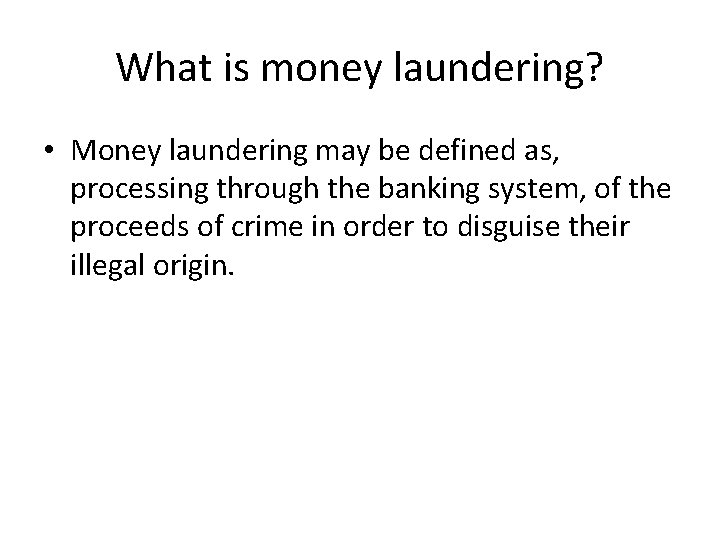
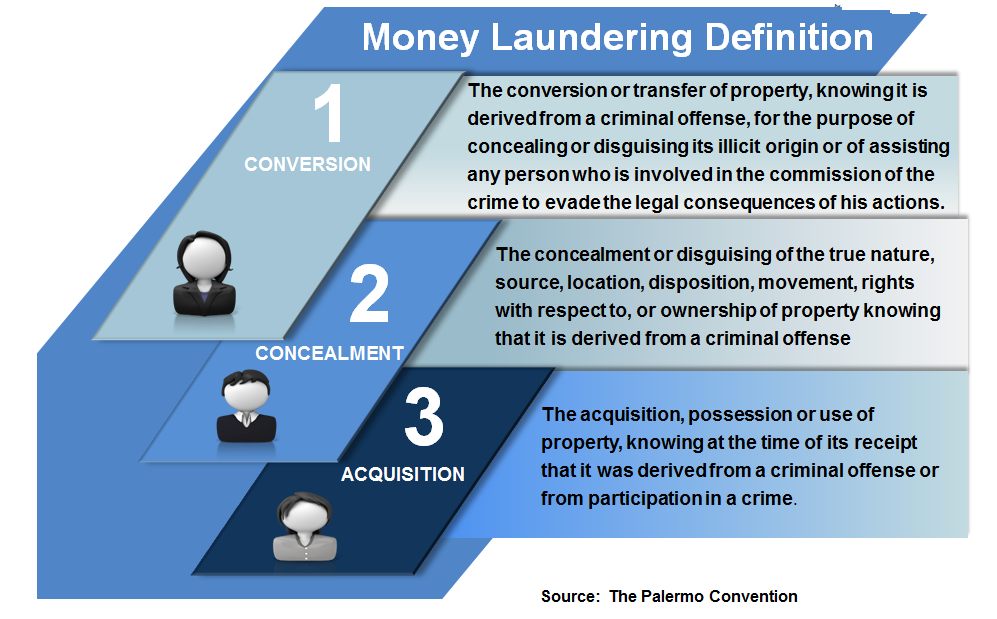
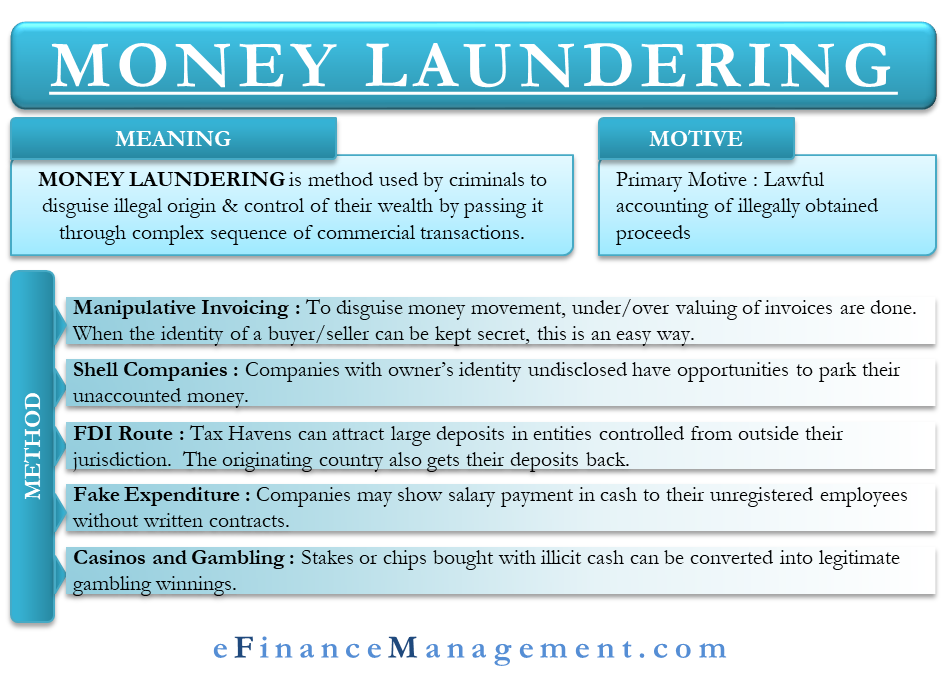
Definition Of Money Laundering In Crime. This stage represents the initial entry of the dirty cash or proceeds of crime into the financial system. Money laundering - a definition Most of us imagine money launderers to be criminals involved in drug trafficking or terrorism or to be someone like Al Capone. Money laundering is an offence in its own right but it is also closely related to other forms of serious and organised crime as well as the financing of terrorism. Money laundering is concealing or disguising the identity of illegally obtained proceeds so that they appear to have originated from legitimate sources.
 Infographic Money Laundering Is The Process By Which Criminals Conceal The Original Source Of Money To Make It Appear As It S Been Earned Via A Legitimate From pinterest.com
High-end money laundering is a national. By its very nature money laundering is an illegal activity carried out by criminals which occurs outside of the normal range of economic and financial statistics. To be criminally culpable under 18 USC. Moving the funds from direct association with the crime Layering ie. 3 Stages of Money Laundering Placement ie. Money laundering is concealing or disguising the identity of illegally obtained proceeds so that they appear to have originated from legitimate sources.
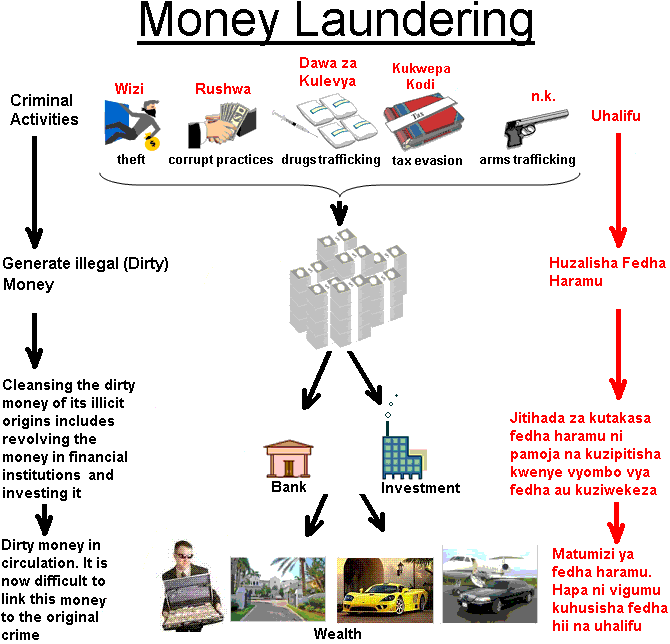
It is frequently a component of other much more serious crimes such as drug trafficking robbery or extortion.
This stage represents the initial entry of the dirty cash or proceeds of crime into the financial system. It is frequently a component of other much more serious crimes such as drug trafficking robbery or extortion. Moving the funds from direct association with the crime Layering ie. First the illegal activity that garners the money places it in the launderers hands. Definition of money laundering a crime involving the movement of illicit money and other gains into legitimate channels in order to disguise the moneys illegal. Money laundering underpins and enables most forms of organised crime enabling organised crime groups to further their operations and conceal their assets.
 Source: pideeco.be
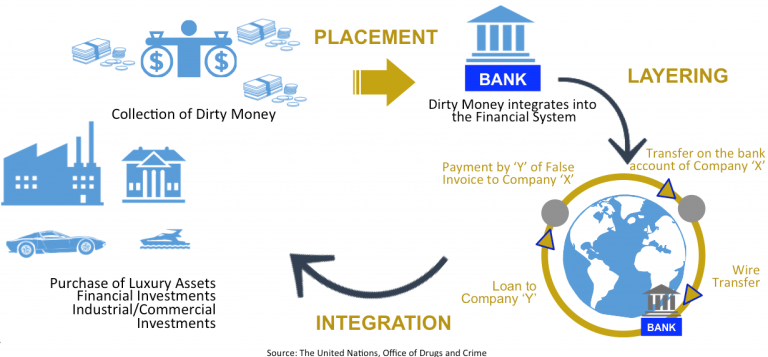
Money laundering underpins and enables most forms of organised crime enabling organised crime groups to further their operations and conceal their assets. Money laundering - a definition Most of us imagine money launderers to be criminals involved in drug trafficking or terrorism or to be someone like Al Capone. Money Laundering meaning in law Money laundering is a term used to describe a scheme in which criminals try to disguise the identity original ownership and destination of money that they have obtained through criminal conduct. 1956 a 1 a defendant must conduct or attempt to conduct a financial transaction knowing that the property involved in the financial transaction represents the proceeds of some unlawful activity with one of the four specific intents discussed below and the property must in fact be derived from a specified unlawful activity. The money laundering process can be broken down into three stages.
 Source: in.pinterest.com
High-end money laundering is a national. Illegitimate assets include the money or assets acquired through illegal activities such as embezzlement corruption or drug trade. Disguising the trail to foil pursuit. The laundering is done with the intention of making it seem that the proceeds have come from a legitimate source. In addition to organised criminal groups professional money launderers perform money laundering services on.
 Source: in.pinterest.com
Money laundering is an offence in its own right but it is also closely related to other forms of serious and organised crime as well as the financing of terrorism. 1956 a 1 a defendant must conduct or attempt to conduct a financial transaction knowing that the property involved in the financial transaction represents the proceeds of some unlawful activity with one of the four specific intents discussed below and the property must in fact be derived from a specified unlawful activity. The money laundering process is divided into 3 segments. The Placement Stage Filtering. Money laundering is a process which typically follows three stages to finally release laundered funds into the legal financial system.
 Source: pinterest.com
Money laundering refers to a financial transaction scheme that aims to conceal the identity source and destination of illicitly-obtained money. Money laundering is an offence in its own right but it is also closely related to other forms of serious and organised crime as well as the financing of terrorism. Definition of money laundering a crime involving the movement of illicit money and other gains into legitimate channels in order to disguise the moneys illegal. Money laundering is a term used for the unlawful process through which illegitimate assets are converted into superficially legitimate assets. Money laundering is the process of disguising criminal proceeds and may include the movement of clean money through the United States with the intent to commit a crime in the future.
 Source: europol.europa.eu
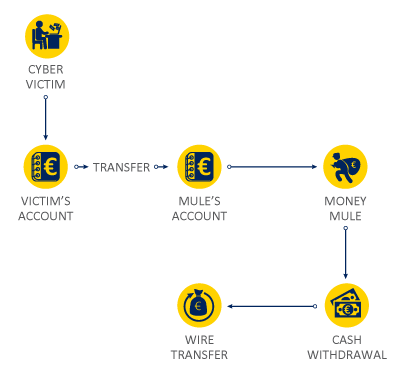
Disguising the trail to foil pursuit. Money laundering underpins and enables most forms of organised crime enabling organised crime groups to further their operations and conceal their assets. This stage represents the initial entry of the dirty cash or proceeds of crime into the financial system. Some common methods of laundering are. Money Laundering meaning in law Money laundering is a term used to describe a scheme in which criminals try to disguise the identity original ownership and destination of money that they have obtained through criminal conduct.
 Source: eimf.eu
3 Stages of Money Laundering Placement ie. 1956 a 1 a defendant must conduct or attempt to conduct a financial transaction knowing that the property involved in the financial transaction represents the proceeds of some unlawful activity with one of the four specific intents discussed below and the property must in fact be derived from a specified unlawful activity. Definition of money laundering a crime involving the movement of illicit money and other gains into legitimate channels in order to disguise the moneys illegal. Process of Money Laundering. Some common methods of laundering are.
 Source: intosaijournal.org
3 Stages of Money Laundering Placement ie. Money laundering refers to a financial transaction scheme that aims to conceal the identity source and destination of illicitly-obtained money. Some common methods of laundering are. The money laundering process can be broken down into three stages. The laundering is done with the intention of making it seem that the proceeds have come from a legitimate source.
 Source: efinancemanagement.com
Money laundering is a process which typically follows three stages to finally release laundered funds into the legal financial system. To be criminally culpable under 18 USC. Process of Money Laundering. Disguising the trail to foil pursuit. The money laundering process can be broken down into three stages.
 Source: pinterest.com
Money laundering is the process of disguising criminal proceeds and may include the movement of clean money through the United States with the intent to commit a crime in the future. Money laundering refers to a financial transaction scheme that aims to conceal the identity source and destination of illicitly-obtained money. Money laundering - a definition Most of us imagine money launderers to be criminals involved in drug trafficking or terrorism or to be someone like Al Capone. 3 Stages of Money Laundering Placement ie. Money laundering underpins and enables most forms of organised crime enabling organised crime groups to further their operations and conceal their assets.
 Source: letstalkaml.com
In addition to organised criminal groups professional money launderers perform money laundering services on. Money laundering is concealing or disguising the identity of illegally obtained proceeds so that they appear to have originated from legitimate sources. Money laundering - a definition Most of us imagine money launderers to be criminals involved in drug trafficking or terrorism or to be someone like Al Capone. The Placement Stage Filtering. It is frequently a component of other much more serious crimes such as drug trafficking robbery or extortion.
 Source: fiu.go.tz
1956 a 1 a defendant must conduct or attempt to conduct a financial transaction knowing that the property involved in the financial transaction represents the proceeds of some unlawful activity with one of the four specific intents discussed below and the property must in fact be derived from a specified unlawful activity. 1956 a 1 a defendant must conduct or attempt to conduct a financial transaction knowing that the property involved in the financial transaction represents the proceeds of some unlawful activity with one of the four specific intents discussed below and the property must in fact be derived from a specified unlawful activity. The money laundering process can be broken down into three stages. First the illegal activity that garners the money places it in the launderers hands. High-end money laundering is a national.
Source: pinterest.com
It is frequently a component of other much more serious crimes such as drug trafficking robbery or extortion. The money laundering process is divided into 3 segments. It is frequently a component of other much more serious crimes such as drug trafficking robbery or extortion. The Placement Stage Filtering. This stage represents the initial entry of the dirty cash or proceeds of crime into the financial system.
 Source: pinterest.com
Money Laundering meaning in law Money laundering is a term used to describe a scheme in which criminals try to disguise the identity original ownership and destination of money that they have obtained through criminal conduct. Money laundering is a process which typically follows three stages to finally release laundered funds into the legal financial system. Money laundering is an offence in its own right but it is also closely related to other forms of serious and organised crime as well as the financing of terrorism. Money Laundering meaning in law Money laundering is a term used to describe a scheme in which criminals try to disguise the identity original ownership and destination of money that they have obtained through criminal conduct. Money laundering refers to a financial transaction scheme that aims to conceal the identity source and destination of illicitly-obtained money.
This site is an open community for users to submit their favorite wallpapers on the internet, all images or pictures in this website are for personal wallpaper use only, it is stricly prohibited to use this wallpaper for commercial purposes, if you are the author and find this image is shared without your permission, please kindly raise a DMCA report to Us.
If you find this site serviceableness, please support us by sharing this posts to your favorite social media accounts like Facebook, Instagram and so on or you can also save this blog page with the title definition of money laundering in crime by using Ctrl + D for devices a laptop with a Windows operating system or Command + D for laptops with an Apple operating system. If you use a smartphone, you can also use the drawer menu of the browser you are using. Whether it’s a Windows, Mac, iOS or Android operating system, you will still be able to bookmark this website.